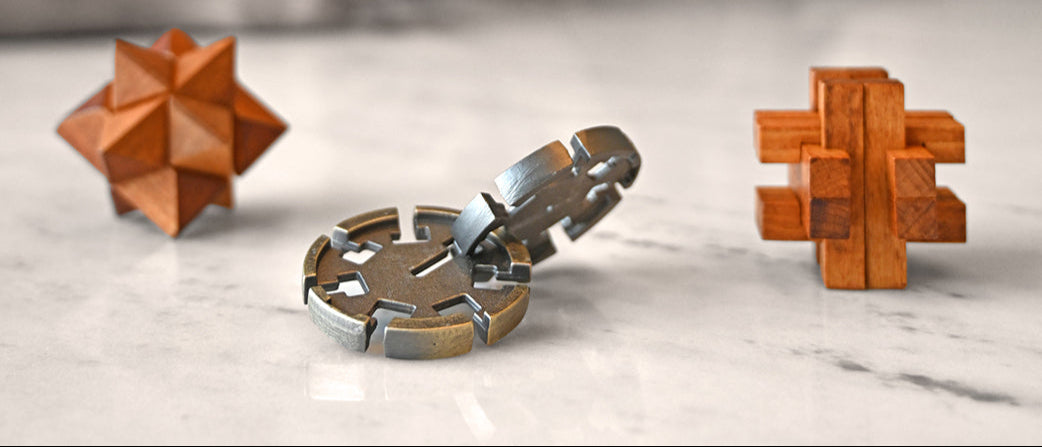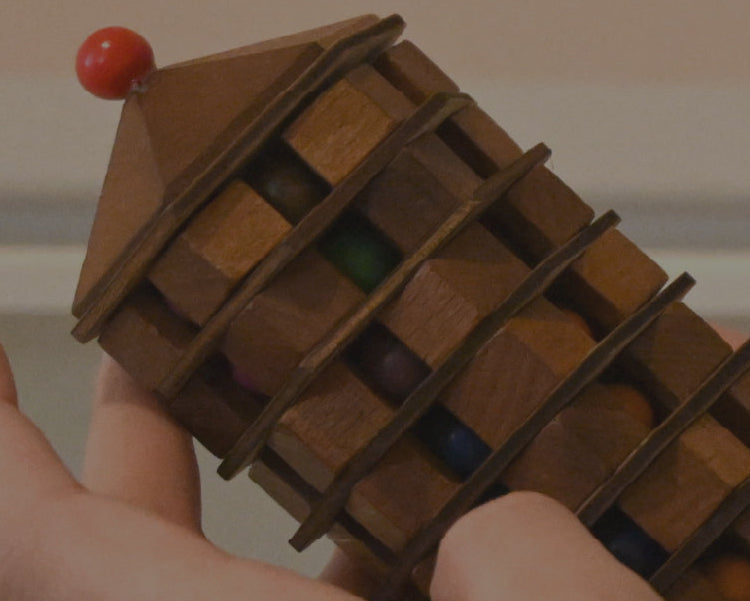




If you have ever lost track of time working out a wooden puzzle or a tricky logic game, you already know the feeling: the world goes quiet, and for a few minutes the only thing that exists is the problem in your hands. A lot of people ask whether that feeling is doing anything useful, or whether brain teasers are just a pleasant way to pass the time. The honest answer is somewhere in the middle, and it is more interesting than the hype suggests.
Below is a grounded look at what puzzles and brain teasers can reasonably do for you, what the research does and does not support, and how to choose a puzzle based on what you actually want out of it.
First, a reality check on "brain training"
You have probably seen ads promising that puzzles will make you smarter or hold off cognitive decline. It is worth being careful here. Most research suggests that when you practice a specific mental task, you get better at that task and other tasks that are quite similar to it. What is much harder to prove is that solving puzzles makes you sharper at unrelated things, like remembering names or doing your taxes.
So the most defensible way to think about brain teasers is not as medicine, but as enjoyable exercise for your attention and problem-solving. That framing turns out to be plenty, because the day-to-day benefits are real and you can feel them.
The focus benefit: a workout for sustained attention
A good brain teaser asks you to hold several things in mind at once, test an idea, notice it did not work, and try again. That loop is basically a rep for your working memory and your ability to concentrate on one thing without checking your phone. In a world engineered to fracture your attention every few seconds, sitting with a single problem is a genuinely different mode of thinking.
You do not need to solve anything to get this benefit. The act of staying with a puzzle, resisting the urge to give up or look it up, is the part that stretches your focus. Mechanical puzzles are especially good for this because the feedback is physical and immediate. A dial turns, a piece slides, a lock clicks, and you instantly know whether you are closer or farther from the answer.
The stress benefit: why puzzles feel like unplugging
There is a reason people reach for a puzzle at the end of a long day. Absorbing, low-stakes challenges can put you into a state psychologists call flow: fully engaged, mildly challenged, and pleasantly unaware of the clock. Flow tends to feel restorative, and unlike scrolling, it leaves most people calmer rather than more wound up.
Part of the appeal is the stakes. Nothing bad happens if you do not solve a brain teaser tonight. That safety is what makes it relaxing. It gives your mind a defined, self-contained problem to chew on instead of the open-ended worries that usually crowd in when things get quiet. A small fidget or desktop puzzle can serve the same purpose in shorter bursts, giving restless hands something to do during a call or a hard conversation.
The "aha" moment: a small, honest hit of reward
The best part of any brain teaser is the moment it finally gives way. That flash of insight, the sudden reorganizing of the problem in your head, comes with a real jolt of satisfaction. It is the same reward loop that makes puzzles moreish in the best sense: you solve one, and you immediately want the feeling again.
What we would not claim is that this makes you measurably smarter or protects your brain in old age. The evidence for those bigger promises is thin, and anyone selling puzzles as a cure is overstating it. What we will happily claim is that the aha moment is fun, motivating, and a good reason to keep a puzzle within reach.
The memory question, kept honest
Do puzzles help memory? Sort of. Staying mentally active across your life is associated with better cognitive aging, and puzzles are one pleasant way to stay active. But so is learning an instrument, gardening, or having a lively conversation. Brain teasers are a great option because people actually enjoy them and stick with them, not because they are magic. If you like them, that consistency is the real benefit, and consistency is what any habit needs to matter.
How to pick a puzzle by what you actually want
The best puzzle for you depends on the itch you are trying to scratch. Here is a simple way to choose.
If you want to unplug and relax
Reach for something tactile you can pick up and put down. A Hyper-Twist Fidget ($17.99) is designed for exactly this: quiet, satisfying motion for restless hands, no goal required. It is the puzzle-lover's version of a worry stone.
If you want to sharpen focus
Choose a logic puzzle with a clear objective and honest feedback. The Chroma Cube ($24.99) uses a deck of logic-clue cards to place colored blocks in the one correct arrangement, so every session is a fresh single-solution problem that rewards careful reasoning.
If you love a mechanical "how does this work" challenge
Try a dial or gear puzzle. The Grecian Computer ($15.99) asks you to align rotating rings so the numbers add up correctly, a compact math-and-spatial teaser that lives happily on a desk.
If you are chasing the aha moment
Go for a puzzle box with a secret. The Emperor's Chest ($17.99) hides a chamber you can only reach by working out the mechanism, so the payoff is a genuine reveal, not just a finished pattern.
If you cannot decide
Start with variety. The Curated Collection 5-Pack ($24.99) bundles an assortment of wooden and metal brain teasers, which is a low-pressure way to find out which style clicks for you before you commit to more.
Where to start browsing
If you would rather explore than pick from a list, our Bestsellers collection is the crowd-tested place to begin. For quick, hands-busy stress relief, the Impulse fidget and desk collection is built around focus and calm. And if you just want to wander the whole range, the full Brainteasers collection has something for every mood and skill level.
The bottom line
Are brain teasers good for you? Yes, in the ways that matter day to day. They give your attention a real workout, they offer a calmer kind of downtime than a screen, and they hand you a steady supply of small, satisfying wins. We would not promise they will make you a genius or rewire your memory, but we do not need to. A puzzle that helps you focus, unwind, and enjoy the moment is already doing its job. If any of that sounds good tonight, find a puzzle to unplug with and give your mind something better to hold onto.